

How to Choose Wall Art for a Modern Indian Home qibo.in

Introduction
Indian homes have always celebrated art. From temple carvings to handwoven textiles, the tradition of decorating walls with meaning and craft runs deep. But the modern Indian home is different. It blends contemporary design sensibilities with cultural warmth, natural materials, and a deep appreciation for handcraft.
Choosing wall art for this kind of space requires more than picking something that looks good. It requires pieces that feel right for the architecture, the light, the palette, and the lifestyle. This guide gives you a clear, room-by-room framework for choosing wall art that suits the modern Indian home beautifully.
What Makes the Modern Indian Home Unique
The modern Indian home blends contemporary design with cultural warmth, mixing clean lines with rich textures and natural materials. It also keeps a strong link to craft.
Several characteristics shape how wall art should be chosen for these spaces.
Natural light is abundant but intense. Indian homes receive strong sunlight for much of the year. Wall art needs to handle direct light without fading or losing visual impact.
Colour palettes are warmer than Western minimalism. Walls in Indian homes often carry warm whites, terracotta tones, deep greens, and earthy neutrals. Art must complement these palettes, not fight them.
Handcraft is deeply valued. Mass-produced décor feels out of place in a home that celebrates artisanal quality. Handcrafted wall art aligns naturally with Indian design values.
Spaces serve multiple functions. Indian living rooms often accommodate family gatherings, guests, and daily life simultaneously. Art needs to hold its presence across different uses and lighting conditions.
Architecture varies widely. From compact city flats in Mumbai and Delhi to large bungalows and villas, wall art should suit each space.
The 5 Principles of Choosing Wall Art for a Modern Indian Home
1. Choose Warmth Over Coldness
Cold, industrial, or stark art rarely suits Indian interiors. Warm colours such as terracotta, rust, and ochre work well in many Indian homes. Deep green and earthy brown also suit the colours and natural materials often used there.
Handcrafted pieces with natural material finishes, clay, felt, wood, and woven fibre, bring the kind of warmth that feels at home in Indian spaces.
2. Prioritise Texture Over Flatness
Flat canvas prints and digital posters lack the depth that Indian interiors call for.
Textured wall art, whether sculptural, relief-based, or woven, works with strong natural light in Indian homes. Flat prints cannot match this effect.
Shadows shift as sunlight moves across a textured surface throughout the day. This creates a living quality that adds richness to any room.
Read our guide on 7 ways to add dimension to your walls for practical techniques that suit Indian home proportions.
3. Match the Scale to the Architecture
Indian homes often have higher ceilings and larger walls than their Western counterparts.
Art that is appropriately scaled for these proportions makes a room feel considered and complete. Undersized art on a large wall looks lost and unintentional.
As a rule, art above a sofa should span at least two thirds of the sofa width. Art on a feature wall should be large enough to anchor the entire wall visually.
4. Honour the Craft Tradition
India has one of the richest handcraft traditions in the world. Wall art that reflects this, through clay, textile, mixed media, or handcrafted finishes, connects naturally to the cultural identity of Indian interiors.
Pieces that show visible handcraft, tool marks, layering, irregularity, and material depth, feel more authentic in an Indian home than machine-produced alternatives.
5. Consider Light Conditions
Strong sunlight is a defining feature of Indian interiors. It is also a risk for wall art.
Choose pieces that can handle indirect or direct light without fading. Natural materials like terracotta, Merino wool felt, and sealed metal hold up far better under strong light than printed canvas or paper-based art.
Position art away from direct afternoon sunlight where possible. Use warm artificial lighting in evenings to enhance texture and depth.
Wall Art by Room in a Modern Indian Home
Living Room
The living room is the heart of the Indian home. It hosts family, guests, and daily life. Wall art here must be bold, warm, and able to hold its presence across varying light conditions throughout the day.
What works best:
Large sculptural or textured pieces above the main seating area create a strong focal point. Terracotta and earthy-toned art suits the warm palettes most Indian living rooms carry.
Handcrafted pieces in natural materials, clay, felt, or mixed media feel more appropriate than digital prints or mass-produced canvas art.
Explore Qibo's Sculpted Collection for dimensional statement pieces designed for large living room walls.
What to avoid: Very cold, monochrome, or industrial art. These styles clash with the warmth that defines Indian living spaces.
Bedroom
Indian bedrooms benefit from wall art that creates calm, warmth, and a sense of considered personal space.
What works best:
Soft textured pieces in muted earthy tones work beautifully above the bed. Felt wall art made from natural Merino wool adds warmth and softness that hard materials cannot.
Circular compositions soften the rectangular geometry of beds and wardrobes. Nature-inspired art connects well with the biophilic design sensibility growing across Indian interior design.
Explore Qibo's Felt Art Collection for handcrafted textile wall art suited to bedroom spaces.
What to avoid: Very bold, high-contrast, or visually busy pieces. Bedrooms need calm, not stimulation.
Dining Room
The dining room in an Indian home is a space of gathering, warmth, and shared experience. Art here should enhance the mood of meals and conversation.
What works best:
One strong, symmetrical piece above or beside the dining table works best. Terracotta tones and earthy palettes complement the warmth of food, candles, and warm lighting naturally.
Handcrafted clay or mixed media pieces with visible texture catch warm evening light beautifully. The shadows deepen after dark, making the art feel richer during dinner.
Discover the warm earthy palette of Qibo's Terracotta Tones Collection for dining room pieces that suit Indian interiors naturally.
What to avoid: Very large or overly complex gallery arrangements. The dining table already carries visual complexity. Let the wall art balance it with simplicity.
Entryway and Foyer
The entry to an Indian home sets the tone for everything beyond it. It is the first impression and often the space where guests pause.
What works best:
One striking handcrafted piece with genuine texture and cultural depth. Clay wall art, sculptural relief, or a bold handcrafted panel all make strong first impressions.
Vertical compositions suit the proportions of most Indian entryways, which tend to be tall and narrow. A single vertical piece draws the eye upward and makes the ceiling feel higher.
What to avoid: Small, decorative pieces that get lost in an entryway. The entry needs confidence, not caution.
Pooja Room and Meditation Spaces
Many Indian homes include a dedicated pooja room or meditation corner. These spaces call for art that is calm, meaningful, and culturally resonant.
What works best:
Natural materials like clay, felt, and wood feel appropriate and grounding. Earthy tones and organic forms connect with the spiritual intention of the space.
Avoid overly graphic, colourful, or maximalist art in these spaces. The mood should be one of quiet and presence.
Home Office
With remote work now a permanent feature of Indian urban life, the home office has become a priority space for design consideration.
What works best:
One calm, focused statement piece adds warmth and personality without distracting. Structured compositions in earthy or neutral tones suit working environments best.
Felt wall art has the added benefit of mild acoustic absorption, reducing echo in home offices with hard surfaces.
What to avoid: Busy gallery arrangements or high-contrast, energetic art. The home office needs focus, not stimulation.
Indian Design Styles and the Wall Art That Suits Them
Indian Interior Style
Defining Elements
Best Wall Art Choice
Contemporary Indian
Clean lines, warm neutrals, natural materials
Sculptural or textured handcrafted pieces
Traditional Indian
Rich colours, carved wood, heritage motifs
Clay art, woven textiles, cultural pieces
Indo-Boho
Layered textures, mixed materials, plants
Felt wall hangings, woven art, macrame
Luxury Modern
Marble, metal, statement furniture
Large sculptural metal or relief art
Minimalist Indian
Warm whites, natural wood, single accents
One large terracotta or felt statement piece
Coastal Indian
Light fabrics, rattan, ocean tones
Woven or natural fibre wall art
Colours That Work in Modern Indian Interiors
Choosing art with the right colour palette is as important as choosing the right material.
Terracotta and rust are the most versatile choices for Indian homes. They connect to the earthy tones of Indian architecture and complement both warm and neutral palettes naturally.
Our guide on why terracotta wall decor suits modern interiors explains how to use earthy tones effectively across different rooms.
Deep green and olive add richness and a biophilic quality that suits Indian homes surrounded by gardens or natural light.
Warm white and ivory work as tonal art choices in rooms where the furniture and textiles already carry colour.
Ochre and mustard reference Indian craft traditions and work beautifully in bedrooms and dining rooms with warm wood furniture.
Charcoal and deep navy add drama and sophistication. Use sparingly as accent tones in art rather than dominant palettes.
What Is Felt Art and Why It Suits Indian Homes
Felt art made from Australian Merino wool is one of the best choices for modern Indian homes.
Its natural softness, warmth, and colour richness align perfectly with the tactile, warm interiors that define contemporary Indian design.
Merino wool handles humidity and temperature changes well, making it a practical choice for the Indian climate.
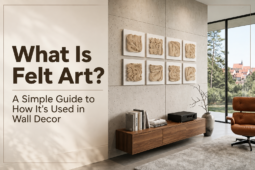
Read our full guide on what felt art is and how it is used in wall decor for a complete introduction to this material.
Sizing Guide for Indian Homes
Wall Width
Recommended Art Width
Notes
Up to 90 cm
45 to 60 cm
Small accent wall or narrow corridor
90 to 150 cm
70 to 100 cm
Standard bedroom or study wall
150 to 240 cm
100 to 150 cm
Living room or dining room feature wall
Above 240 cm
150 cm or a curated arrangement
Large living rooms, lobbies, open plan spaces
Common Mistakes Indian Homeowners Make When Buying Wall Art
Choosing art that is too small for the wall. This is the most common mistake across all home sizes in India.
Buying flat prints for walls that need texture. Indian homes with strong natural light show the flatness of printed art clearly.
Ignoring the existing colour palette. Art that clashes with warm Indian palettes disrupts the entire room.
Buying multiple small pieces instead of one strong piece. A single well-chosen handcrafted piece almost always outperforms a cluster of smaller prints.
Not considering light conditions. Strong Indian sunlight fades printed canvas art faster than natural material pieces.
Choosing Western-style cold or industrial art. These styles rarely feel at home in the warmth of an Indian interior.
Pro Tips from Qibo's Design Team
Pro Tip: In Indian homes with warm white walls, terracotta and earthy toned art creates an instant sense of completion. The palette feels native to the architecture.
Pro Tip: If your home has marble or stone flooring, balance the hardness underfoot with soft, tactile wall art above eye level. Felt and woven pieces work exceptionally well in this combination.
Did You Know? India has one of the richest handcraft traditions in the world. Choosing handcrafted wall art supports artisan communities and brings genuine cultural depth into your home.
Pro Tip: Warm evening lighting transforms handcrafted textured art dramatically in Indian homes. Invest in warm-toned bulbs alongside your wall art for the full effect.
Summary
Choosing wall art for a modern Indian home is about warmth, texture, scale, and craft.
Indian interiors have strong natural light, warm colour palettes, and a deep cultural connection to handmade things. Wall art that honours these qualities will always feel right.
Choose handcrafted over mass-produced. Choose texture over flatness. Choose warmth over coldness. Start with one strong piece. Let it anchor the room. Build from there.
Ready to find the right piece for your home? Explore Qibo's Terracotta Tones Collection, browse the Felt Art Collection, discover dimensional pieces in the Sculpted Collection, or visit the Qibo homepage to explore everything Qibo has to offer.
FAQs
What wall art suits a modern Indian home best?
Handcrafted pieces in natural materials like terracotta, felt, clay, and mixed media suit modern Indian homes best. They align with the warm palettes, strong light conditions, and deep craft traditions that define Indian interiors.
Which colours work best for wall art in Indian homes?
Terracotta, rust, deep green, ochre, warm white, and earthy neutrals all work beautifully. Avoid cold grey tones and stark industrial palettes.
Is textured wall art better than flat prints for Indian homes?
Yes. Strong Indian sunlight exposes the flatness of printed art clearly. Textured and sculptural pieces interact dynamically with natural light and look richer across changing light conditions throughout the day.
What size wall art suits Indian living rooms?
Art above a sofa should span at least two-thirds of the sofa width. On a large feature wall above 200 cm wide, choose art that is at least 130 to 150 cm wide or a curated arrangement of similar scale.
Can I mix different art styles in an Indian home?
Yes, if they share a common colour thread or material quality. Mixing terracotta clay art with woven felt pieces works well because both share natural material warmth.
Where can I buy handcrafted wall art for an Indian home?
Qibo offers a curated range of handcrafted wall art designed for modern Indian interiors. Browse New Arrivals for the latest pieces or visit the Qibo homepage to explore all collections.
Leave Your Comment